
Next-Gen BFSI: How Artificial Intelligence is Driving Financial Innovation
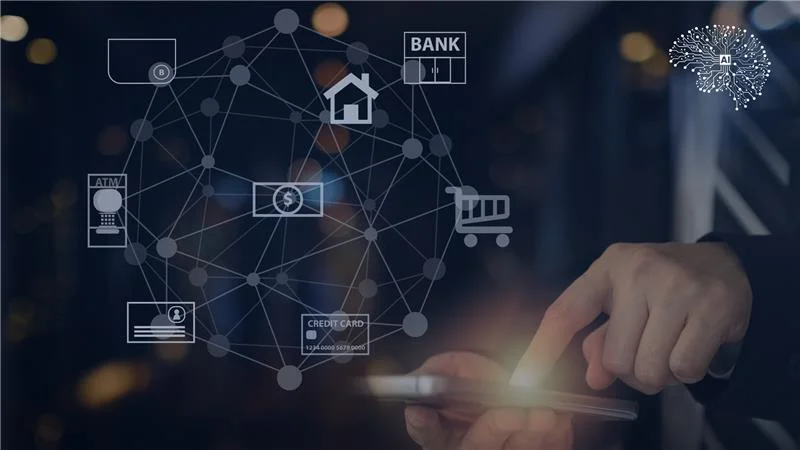
Introduction The primary basis for using these set of technologies, simply put is the ability of AI to swiftly analyse large amounts of data to assess trends, foresee future performance, & permit investors to estimate growth and risk. Another benefit of AI in this sector is its massive scalability. This blog explores the emerging trends and current use cases where AI is already making a significant impact. Use Cases & Trends of Artificial Intelligence in the BFSI Sector As per the source Statista, “Data analytics maintained its position as the leading AI application among financial services firms in 2024. A 2024 industry survey indicated that 57 percent of companies leveraged AI for data analytics, showing modest growth from the previous year.” The potential versatility and use case of AI technology in BFSI is endless. However, the increase & sequential spending on AI is corroborated with certain trends within this sector. 1. Cybersecurity and Fraud Prevention Algorithms in AI, can effectively be used to pinpoint anomalies and suspicious outlines in financial transactions, helping to prevent fraudulent activities & losses. Cyber threats actively target sensitive financial data, which can be easily sourced by cybercriminals and unknown threats. A classic use case in BFSI sector is Denmark’s largest bank, Danske Bank which effectively leveraged AI in fraud prevention. “Implementing a fraud detection algorithm powered by deep learning, the bank experienced a 50% increase in fraud detection capabilities and a 60% reduction in false positives.” Source: TechMagic One of the main benefits, also of using AI in this field, is its ability to monitor real time effects of cyberattacks in a swift and precise manner before a security event even occurs. Other use prominent use cases in this trend, are: Malware detection – Analyse suspicious patterns within E-mail(phishing), Files, User behaviour and network data, etc. Vulnerability Management in Banking software – Assess weak points and gaps in networks and systems so Banks can focus on important security tasks. A practical example is how JP Morgan Chase reduce a 20% Payment validation rejection rates in fraud management, using AI which lead to significant cost savings. Source: Ernst & Young 2. Customer Service & Experience For Example – Bank of America’s virtual assistant, Erica, is a prime example of AI in this BFSI sector. This virtual assistant provides personalized financial advice, responds to queries, and further alert customers about potential issues or opportunities. Source: Cloud 4C 3. Risk Management & Compliance Risk management and compliance is a key function for players in the broad BFSI sector. For Banks, AI serves many purposes. In Banking, firms are increasingly integrating AI into proprietary systems automated document review, and automated text- based reporting. Since banks rely extensively on monitoring risk, AI can be used for various modelling purposes such as credit risk, operational risk and market risk assessment. For example – “Standard Chartered, for instance, is using AI to improve their transaction monitoring system. This helps them spot suspicious transactions quicker, making their anti-money laundering (AML) efforts more effective.” Source: Data Sniper In the wide field of Insurance, risk and compliance is a very important division/trend which can be automated. Since the BFSI sector uses traditional non-AI monitoring tools, cases of false positives reach up to a huge proportion of 90%. – This is a very large proportion. Source: Lucinity 4. Insurance Sector This sector is on the verge of a significant paradigm shift, where AI is primarily focused on: Personalized Dynamic Pricing: Apart from personalizing insurance policies, AI helps to assess risk profiles of customers in an automated manner, which aids in attracting a wider customer set and allows improvement in risk. In some cases, premiums are calculated in real time as per customer’s ongoing habits, health data, etc. Ex: Metromiles’ Pay-Per-Mile Car Insurance utilizes AI to assess driving behavior, adjusting premiums accordingly. Source: Deloitte Automated Underwriting: Right from document summaries and claims servicing, AI can easily supplement human professionals. Although there is a risk of bias (being overweight toward certain potential policy holders) using data, automation can greatly reduce cost and time. Legal Compliance: By permitting firms to be up to date on the changing regulatory frameworks, AI can improve decision-making, which will result in clear error reduction and cost savings. 5. Data Analytics AI models can analyze historical data to predict trends, calculate claim probability, and improve pricing schemes. As per Statista, “The financial sector’s spending on Artificial Intelligence (AI) is projected to experience substantial growth, with an estimated increase from 35 billion U.S. dollars in 2023 to 126.4 billion U.S. dollars in 2028.” AI’s high growth in other usage fields is undermined by its versatility in the analytics sphere. As per Hewlett Packard, “AI can quickly analyze large volumes of data to identify trends and help forecast future performance, letting investors chart investment growth and evaluate potential risk.” Conclusion The ingenuity of AI in Global BFSI has innumerable use cases, many of which have been undiscovered and are in the exploratory phase. Since the BFSI sector offers services and products (Mortgage, Travel Insurance, Line of Credit, etc) which have many potential variations, the resultant usage and growth of AI is limitless.
The 8 most reassuring examples of using AI in healthcare
Artificial intelligence (AI) is now the most exciting development in the field of healthcare technology. It has already arrived in some fields, broadening the scope of what radiologists and dermatologists can diagnose, aiding emergency room triage decisions, identifying potentially useful new drugs, and facilitating communication amongst hospitalized patients. But we’ve only scratched the surface here. The dawn of a new era, marked by a technological and cultural upheaval, is near at hand. Here are 8 intriguing instances of algorithms helping healthcare professionals, showing applications already in clinical usage and benefiting medical professionals and patients. Artificial intelligence can aid in the early diagnosis of atrial fibrillation. AI can determine within a minute if your ECG is normal, if you may have AFib, or if you have “unclassified” risks. A.I. helps in reducing sepsis-related hospital fatalities. Sepsis Watch deep learning system aids in the evaluation of a patient’s risk of getting sepsis. It notifies the hospital’s fast response team of high-risk patients and helps them through the first three hours of administering care. Smart bands that can detect Pediatric seizures. In the event of a seizure or impending seizure, wearable devices can alert the individual and/or their loved ones and caregivers. Dermatologists can benefit from skin-checking algorithms. With the help of a skin-checking app, a user may snap a picture of a suspicious mole or growth on their body, have it analyzed by an artificial intelligence system, and then have their results confirmed by a dermatologist. Stroke can now be detected on CT scans thanks to artificial intelligence, giving doctors a fighting chance. Artificial intelligence (AI) can analyze computed tomography angiography (CTA) images for signs of large vascular occlusion (LVO) and immediately notify on-call stroke specialists about individuals who may benefit from treatment. Artificial intelligence uses retinal scans to identify diabetic retinopathy on its own.Automated diabetic retinopathy (DR) screening systems are a promising solution and have been demonstrated to perform at or above the level of human experts on DR classification tasks when assessed on their internal datasets. AI is assisting pathologists in the diagnosis of metastatic breast cancer. Deep learning models aims to find early signs of the disease, classification, grading, staging, and prognostic prediction. Artificial intelligence aids to construct drug discovery platforms that are both sophisticated and centralized. Source: Medicalfuturist 🔥 Trending Stories 14 Tech Leaders Offer Their Best Pieces of Advice to New Entrepreneurs Ultimate Guide For Hiring On-demand Developers For Your Startup Top 25 Digital Transformation Influencers You Need to Follow