
The Rise of AI-Powered Virtual Health Assistants
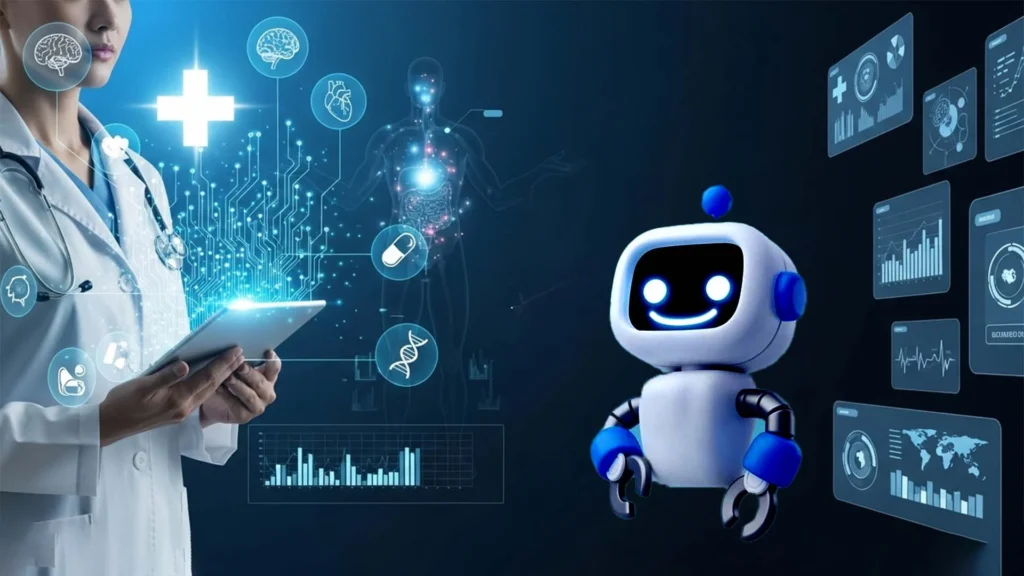
The landscape of healthcare delivery has undergone a remarkable transformation with the rise of AI virtual assistants. In an industry where time and cost are critical, the impact of AI on both patients and hospitals is truly unmatched. Traditional healthcare, which depends heavily on human expertise, often grapples with issues like limited data analysis, the potential for human error, and slow administrative processes. These challenges can result in higher costs and delays in diagnoses. Virtual health assistants are transforming healthcare by enabling patients with instant access to medical advice, appointment scheduling, and medication reminders, enhancing convenience. By automating routine tasks, these assistants help reduce the work of healthcare providers, allowing doctors and nurses to concentrate on more complex aspects of patient care. These Virtual Health Assistants skilfully blend natural language processing with personalized data analysis to offer real-time, customized medical guidance, effectively connecting patients with their healthcare providers. What are AI-Powered Virtual Health Assistants? VHAs are AI-powered digital assistants designed to support patients, healthcare providers, and administrative staff by automating tasks like appointment scheduling, symptom assessment, medication reminders, etc. Modern VHAs have far more versatile capabilities, functioning as assistants for both patients and health providers. They are digital tools that simulate human-like interaction by leveraging technologies, mainly NLP and Machine Learning, for assistance in key medical applications. Unlike traditional static information systems, VHAs offer interactive, context-aware, and personalized responses, making healthcare more accessible and convenient for patients. The widespread use of these technologies is particularly beneficial for easing the burden on healthcare workers, enhancing access to services in remote locations, and enhancing preventive care efforts. One of their defining traits is their continual evolution, driven by their vast potential. Early platforms initially offered pre-programmed responses, lacking both understanding and adaptability. Through technological improvements, modern VHAs are powered by advanced AI, including deep learning models, which enable them to process and interpret natural language, learn from interactions, and provide more sophisticated and personalized responses Key Benefits of AI Virtual Health Assistants From streamlining hospital administration to direct health monitoring, VHAs represent a transformative innovation in healthcare by combining automation, personalization, and accessibility. AI Virtual Health Assistants Use Cases Patient Care – HealthCare Providers – The Future Healthcare management and remote monitoring are advancing towards more intuitive methodologies. AI in virtual assistance is no longer being used for simple background checks or data collection, but is evolving into a partner in personalized, dynamic healthcare. Forecasting tremendous growth over the next decade, the VHA sector is highly promising. In the future, it is estimated that VHAs using advanced language models will understand patient questions and provide multilingual support. These systems will specialize in predictive analytics, detecting health problems before they escalate into emergencies. Rather than responding to issues after they occur, future assistants will examine patient data trends to enable early intervention and reduce hospital readmissions. Conclusion VHAs have emerged as a next-generation solution bridging the gap between patients and providers, especially in preventive care. They hold significant potential in closing healthcare gaps in rural areas and ensuring equity across communities. At Sparity, we truly believe that the future of healthcare is all about smart, AI-driven solutions that connect patients with providers in a meaningful way. With our deep knowledge in AI, cloud technology, and data engineering, we assist healthcare organizations in seamlessly integrating Virtual Health Assistants into their systems making care more accessible, scalable, and secure for everyone. Whether it’s creating NLP-powered assistants, rolling out predictive analytics models, or ensuring smooth data interoperability, Sparity is here to support hospitals, and health-tech innovators in rethinking how care is delivered. Our solutions not only streamline processes but also provide valuable insights that help in making informed decisions.
Automating Customer Relationship Management(CRM) for a Logistics Client

Client Challenges The client faced several challenges in their existing CRM processes: Manual ProcessesThe company’s CRM relied heavily on manual input, which was time-consuming and prone to errors. This resulted in delays in responding to customer inquiries and inconsistent service quality. Resource ConstraintsThe logistics company struggled with limited human resources, making it difficult to manage high volumes of customer queries, leading to a backlog and frustrated customers. Inconsistent Data ManagementDue to the manual nature of their CRM processes, data collection was inefficient, making it difficult to gather valuable insights and make informed business decisions. Delayed Response TimesCustomers often faced long wait times for responses, as the existing system lacked automation, resulting in a poor customer experience. Solution AI Chatbots for Customer InteractionSparity integrated AI-driven chatbots into the client’s CRM system. These chatbots were programmed to handle a wide range of customer queries, providing instant responses. The chatbots utilized Natural Language Processing (NLP) to understand customer inquiries and provide accurate answers, significantly reducing response times. Automatic Query ResolutionThe solution included an AI system that automatically searched through the company’s internal databases and systems to find the most relevant information for each customer query. This allowed the AI to generate responses autonomously, ensuring that customers received prompt and accurate information without human intervention. AI-Powered Customer Support TrainingTo further enhance the capabilities of the client’s customer service team, Sparity implemented an AI-powered training program. This program used machine learning algorithms to analyze past customer interactions and generate training modules tailored to common customer issues. This helped in upskilling the service representatives and enabled them to handle calls more effectively. Advanced Analytics IntegrationSparity integrated advanced data analytics tools to provide real-time insights into customer interactions. This allowed the client to monitor customer service performance continuously, identify trends, and make informed adjustments to their strategies. Workflow Automation and Task ManagementThe solution also included workflow automation tools that streamlined task management for customer service representatives. These tools automatically assigned tasks based on priority, ensuring that no customer query was overlooked and that all tasks were handled efficiently. Comprehensive Data Management SolutionsSparity implemented a robust data management system that automatically logged and organized all customer interactions. This system enabled easy access to customer data, facilitating quick retrieval of information for future interactions and improving overall data-driven decision-making. Benefits The implementation of Sparity’s solution delivered several key benefits to the client: Increased EfficiencyAchieved a 40% reduction in response times, enabling the client to handle 30% more customer queries with the same resources. Cost SavingsReduced operational costs by 35% due to decreased manual processes and increased efficiency from AI-driven solutions. ScalabilityEnabled a 60% increase in customer service capacity without proportional workforce expansion. Enhanced Data InsightsGained 50% more actionable insights into customer behavior and preferences, leading to better decision-making.
Top 10 Impact of Digital Transformation on Business Models and Industries in 2025

Discover the impact of digital transformation is revolutionizing business models and industries, driving efficiency, innovation, and competitiveness
Top 10 AI and ML Databases Shaping the Future of Innovative AI Projects

Discover the top 10 AI and ML databases tailored for AI and ML applications. Learn about their features, compatibility from Sparity’s guide
Innovative Product Development Trends to Integrate in 2025

Your guide for Product development approaches. Discover trends and technologies that shapes the future of product engineering in 2024 and beyond.
The Rise of AI and ML in Power BI

Learn how AI and ML in Power BI enhance business intelligence and data analysis; Copilot and Microsoft Fabric revolutionize reporting with AI.
The role of Artificial Intelligence (AI) and Machine Learning (ML) in cloud computing
Discover the role of AI & ML in cloud computing. Explore how AI and ML enhance data management, improve data security, streamline workflows, optimize resource allocation, and reduce costs
Digital transformation in Huawei Cloud: Key steps to a smarter future
Roc Bai, VP: Huawei Cloud Southern Africa, explains that African organizations have an opportunity to leapfrog the rest of the world, but they must advance through their digital transformation journeys now. To achieve operational excellence, enable a hybrid and remote workforce, and deliver insights at scale, organizations should align with top digital transformation trends. Successful digital transformation can create value for business in three key ways: better experience for customers, users, partners, suppliers and employees, improved efficiency in R&D, production, distribution and service, and reduce work costs and management risks. Huawei Cloud is one of the first cloud service providers to install nodes in Africa, as well as the first to establish its network across the continent. Huawei Cloud inherits Huawei’s more than 10 years of industry experience in the ICT field, deeply understands industry scenarios and combines the capabilities of ecological partners to find the right technology for industry customers and do a good job of implementation. Huawei Cloud actively encourages deep digitalization and everything is a service. It invests in infrastructure, R&D and technology investment to accelerate application modernization, and provides industry digital transformation experience to enable industry to go to the cloud. It also releases the latest technologies such as AI and tools for software development, data governance and digital content production, all openly on the cloud. Technology drives transformation and Huawei’s key technologies are the unified cloud infrastructure, unified data lake base, unified integration platform, and unified security control platform. The unified cloud infrastructure speeds up service rollout, provisioning, and implement DevOps. The united data lake base enables efficient decision-making and business value mining, while the united integration platform enables the integration and docking of data, messages and APIs between cross-business systems. The security control platform provides security service capabilities and a security governance platform to help enterprises take into account security compliance and provide escort for business. Digital transformation is a deep business change for an organization and five areas of change are recommended to support it: change of consciousness, organizational transformation, culture shift, transformation of methods, and paradigm shift. Huawei Cloud aims to make the cloud ubiquitous, make intelligence omnipresent, and build an intelligent world cloud base together. It has built a contract management center to realize the capabilities of automatic contract review, global contract review, intelligent response to bids, similar contract recommendation, automatic analysis of terms and conditions and intelligent identification of risks. Source: itweb 🔥 Trending Stories 14 Tech Leaders Offer Their Best Pieces of Advice to New Entrepreneurs Ultimate Guide For Hiring On-demand Developers For Your Startup Top 25 Digital Transformation Influencers You Need to Follow
Here are 6 recent healthcare moves from Google
Google continues to expand its presence in the healthcare. Becker’s has highlighted six healthcare moves from Google recently. Source: Beckers Hospital Review 🔥 Trending Stories 14 Tech Leaders Offer Their Best Pieces of Advice to New Entrepreneurs Ultimate Guide For Hiring On-demand Developers For Your Startup Top 25 Digital Transformation Influencers You Need to Follow
The role of AI and machine learning in digital transformation

AI and Machine Learning are transforming various industries and driving digital transformation. Discover the role of AI and ML in effectively implement digital transformation strategies