
Why healthcare is the biggest target for cyberattacks
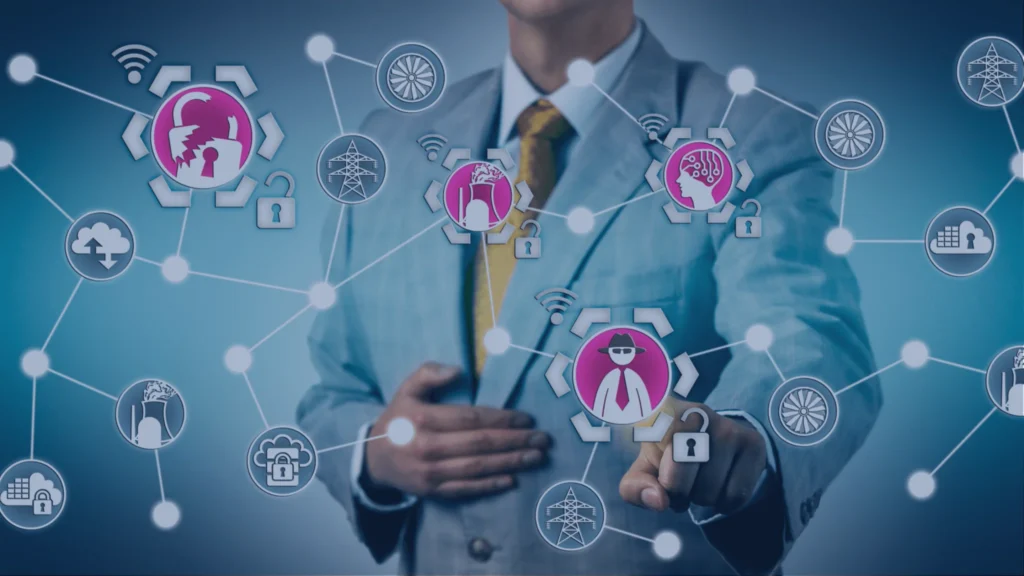
Healthcare organizations are easy target of cyberattacks because patient data is valuable, old technology, staffs lack knowledge, remote access, Medical devices are easy target
Asynchronous telemedicine is coming & here’s why it’s the future of remote care
In the future years, we will have to become accustomed to the term asynchronous telemedicine. It can take many different forms, such as sending a recorded video or audio message to a health practitioner for analysis and examination or providing a recorded health history to a professional. Asynchronous telemedicine can address capacity issues arising from specialist shortages. Furthermore, It Increases efficiency in managing schedules and workload, allows patients to record/image capture their symptoms, addresses language issues, provides younger patients with a more preferable form of communication. Asynchronicity is not restricted to the relationship between patient and healthcare provider; it can also occur between general practitioners and specialists. Doctor shortages and physician burnout are two of the most urgent issues facing all healthcare systems. Any digital health solution capable of addressing these issues is welcome. In the long run, these models will benefit patients who now have barriers to accessing quality healthcare. The key takeaway is we need to find the balance between increasing efficiency and not losing empathy in care. Source: Medicalfuturist 🔥 Trending Stories 14 Tech Leaders Offer Their Best Pieces of Advice to New Entrepreneurs Ultimate Guide For Hiring On-demand Developers For Your Startup Top 25 Digital Transformation Influencers You Need to Follow
The 8 most reassuring examples of using AI in healthcare
Artificial intelligence (AI) is now the most exciting development in the field of healthcare technology. It has already arrived in some fields, broadening the scope of what radiologists and dermatologists can diagnose, aiding emergency room triage decisions, identifying potentially useful new drugs, and facilitating communication amongst hospitalized patients. But we’ve only scratched the surface here. The dawn of a new era, marked by a technological and cultural upheaval, is near at hand. Here are 8 intriguing instances of algorithms helping healthcare professionals, showing applications already in clinical usage and benefiting medical professionals and patients. Artificial intelligence can aid in the early diagnosis of atrial fibrillation. AI can determine within a minute if your ECG is normal, if you may have AFib, or if you have “unclassified” risks. A.I. helps in reducing sepsis-related hospital fatalities. Sepsis Watch deep learning system aids in the evaluation of a patient’s risk of getting sepsis. It notifies the hospital’s fast response team of high-risk patients and helps them through the first three hours of administering care. Smart bands that can detect Pediatric seizures. In the event of a seizure or impending seizure, wearable devices can alert the individual and/or their loved ones and caregivers. Dermatologists can benefit from skin-checking algorithms. With the help of a skin-checking app, a user may snap a picture of a suspicious mole or growth on their body, have it analyzed by an artificial intelligence system, and then have their results confirmed by a dermatologist. Stroke can now be detected on CT scans thanks to artificial intelligence, giving doctors a fighting chance. Artificial intelligence (AI) can analyze computed tomography angiography (CTA) images for signs of large vascular occlusion (LVO) and immediately notify on-call stroke specialists about individuals who may benefit from treatment. Artificial intelligence uses retinal scans to identify diabetic retinopathy on its own.Automated diabetic retinopathy (DR) screening systems are a promising solution and have been demonstrated to perform at or above the level of human experts on DR classification tasks when assessed on their internal datasets. AI is assisting pathologists in the diagnosis of metastatic breast cancer. Deep learning models aims to find early signs of the disease, classification, grading, staging, and prognostic prediction. Artificial intelligence aids to construct drug discovery platforms that are both sophisticated and centralized. Source: Medicalfuturist 🔥 Trending Stories 14 Tech Leaders Offer Their Best Pieces of Advice to New Entrepreneurs Ultimate Guide For Hiring On-demand Developers For Your Startup Top 25 Digital Transformation Influencers You Need to Follow
Three reasons why NLP will go mainstream in healthcare in 2023
Natural language processing is an AI subfield with promising medical applications, as it can extract clinically relevant information from the vast amounts of unstructured text stored in EHRs and databases. Marty Elisco, CEO of Augintel, an NLP startup in the healthcare industry, predicts that the field will explode in popularity by 2023 for three reasons: The kinks have been ironed out meaning the technology has matured, its usefulness has been demonstrated, and the time is right. In context to kinks have been ironed out, Marty Elisco says Multiple fields and industries can benefit from NLP’s use, including e-discovery, voice-to-text recognition, and mental and social health care. However, we are employing NLP in this area for content intelligence, also known as information extraction, from written material. With the falling cost of model development in recent years, it is now viable to create models tailored to certain industries. The pilots that were meant to verify the viability of industry-specific solutions have concluded, making such solutions commercially available in the past year or so. Thus, the kinks have been ironed out. Innovative software companies have developed mission-specific SaaS solutions with rich context that are easily accessible, and customers are now reaping the benefits. In regards to NLP’s value has been proven, Marty Elisco says as one example, caseworkers at Allegheny County were continuing to find that so much rich information was buried within case notes and unstructured data using NLP. Using the NLP technology, one caseworker reports saving five hours per week on routine administrative tasks. Allegheny County has improved its understanding of social factors influencing health thanks in part to an NLP platform. Finally, in regards to her comment on “time is right”, she says it’s no secret that in recent years, healthcare institutions everywhere have struggled to overcome the effects of staff shortages and burnouts. The clinicians are overworked and are spending too much time away from the individuals in their care, and they’re fed up. When you consider the effect that lost case knowledge due to the attrition, it becomes evident that we cannot afford to keep things as they are if we want a sustainable healthcare system. However, recent developments in low-cost machine learning techniques, especially natural language processing (NLP), can help reduce some of that pressure. It is now the perfect opportunity for healthcare professionals to utilize existing resources. As a result, Marty Elisco anticipates 2023 as the breakthrough year for NLP.Natural language processing is an AI subfield with promising medical applications, as it can extract clinically relevant information from the vast amounts of unstructured text stored in EHRs and databases. Marty Elisco, CEO of Augintel, an NLP startup in the healthcare industry, predicts that the field will explode in popularity by 2023 for three reasons: The kinks have been ironed out meaning the technology has matured, its usefulness has been demonstrated, and the time is right. Source: Healthcareitnews 🔥 Trending Stories 14 Tech Leaders Offer Their Best Pieces of Advice to New Entrepreneurs Ultimate Guide For Hiring On-demand Developers For Your Startup Top 25 Digital Transformation Influencers You Need to Follow
UCHealth launches its first mobile AR experience for patients
The free UCHealth app now provides patients with access to an augmented reality experience that allows them to choose a virtual puppy to play with while waiting for an appointment or at home. While UCHealth is not the first to use VR for distraction therapy and entertainment, the incorporation of AR enables a more immersive user experience for both patients and medical staff. According to the Aurora, Colorado-based health system, roughly 9,000 users have clicked on the new augmented reality feature since it went online. UCHealth has promised to roll out new features in the near future. Maintaining AR capabilities within the core UCHealth app ensures that users can use messaging and other features without leaving the app. The healthcare company stated its goal to develop more augmented reality (AR) based interactions between UCHealth patients to help users understand about medical issues, as well as improve mood and decrease anxiety. Risa Weisberg, chief clinical officer at mental health technology vendor BehaVR, has suggested that VR/AR experiences based on the foundations of empirically supported therapies may serve as an excellent partner to various in-person mental health therapies. Weisberg elaborated, saying that “these experiences,” because they are fully immersive and processed as if they are actually happening to you, have promise to potentially show clinical effectiveness that may be more comparable to that of some in-person therapy, but with the flexibility of being used without a clinician present. Source: Healthcareitnews 🔥 Trending Stories 14 Tech Leaders Offer Their Best Pieces of Advice to New Entrepreneurs Ultimate Guide For Hiring On-demand Developers For Your Startup Top 25 Digital Transformation Influencers You Need to Follow
Q&A: Where digital health funding could go in 2023
Dr. Sunny Kumar, a partner at GSR Ventures, sat down with MobiHealthNews to discuss the financing climate for digital health firms and his forecasts for 2023. In regard to question of big takeaways at digital health in 2022, Dr Kumar says, 2022 has been a year of transition and a healthy reset, as macro factors like the interest rate, the conflict between Russia and Ukraine in Europe, “zero-COVID” in Asia, and the supply chain affected the entire economy, including the healthcare ecosystem. Investors, entrepreneurs, and huge corporations have all taken a step back and reevaluated the ecosystem, asking, “Where are we creating true value?” Dr. Sunny Kumar believe that this is the question that everyone, especially the investing community, is asking. Ultimately, digital health can generate absolute, perhaps world-changing value. In certain cases, however, this may have been somewhat exaggerated in recent years. At their peak, telemedicine companies such as Teladoc traded at 25 to 30X revenue multiples, whereas they now trade at 2X or 3X. He believes that what we are currently witnessing is the markets resetting and realigning, and that the future will be about creating genuine wealth. When asked does he believe that some of this was foreseeable last year, he said, some of the signals were definitely there. Considering how quickly we were to put money into various startups, he believes that some of the investors got a little ahead of themselves. There are still fantastic firms available today, and fundings are still taking place. But things are beginning to settle back into the regular diligence cycles. In regard to how has the digital health funding downfall has affected his decision making and advice for others who are investing. He said, In the past, companies were valued on how fast they could grow, and to some degree, “grow at all costs”. Now, before investing, it’s more important to make sure that your growth is responsible relative to other costs. When asked about what do he think the investment landscape will look like in 2023, he said, Based on his estimations, the grand total of dollars will appear very much like it did in 2022 when viewed from a run rate perspective. The year 2021 saw astronomically high valuations. Companies that went public in 2021 and raised capital haven’t felt the urge to go back to the private markets to raise more money. In 2023, we should see a resurgence of several of these businesses. In his opinion, we can expect to see those businesses returning to the market in 2023, most notably around the middle of that year. An era of slowed growth for the United States and the rest of the world is extremely likely. Even in a shrinking economy, it’s reasonable to spend money if you’re getting $5 or $10 back on your investment. Source: mobihealthnews 🔥 Trending Stories 14 Tech Leaders Offer Their Best Pieces of Advice to New Entrepreneurs Ultimate Guide For Hiring On-demand Developers For Your Startup Top 25 Digital Transformation Influencers You Need to Follow
Health-tech startup productizes patient engagement software using remote teams

Check out how a Health-tech startup company developed fully integrated payment system & redefined patient revenue cycle with its mobile patient intake, check-in, & payment solutions
Health & Wellness firm utilizes specialized talent to drive continuous growth and acceleration
Learn how health and wellness company built a fully integrated fitness tech ecosystem with state-of-the-art software platform integrating Wearable Health Technology Into its gym
AI Based Medical Imaging for Advanced Clinical Diagnosis and Treatment

Learn how sparity developed a AI Based Medical Imaging for Advanced Clinical Diagnosis for a leading healthcare provider that Improved diagnosis accuracy and patient outcomes
Improving Diagnostics in Healthcare with AI-Powered Risk Assessment Model
Find out how US-based healthcare firm developed an Healthcare with AI-Powered Risk preventive diagnosis assessment health monitoring model with IoT devices to track health