
8 Tech Trends Shaping the Future of Healthcare
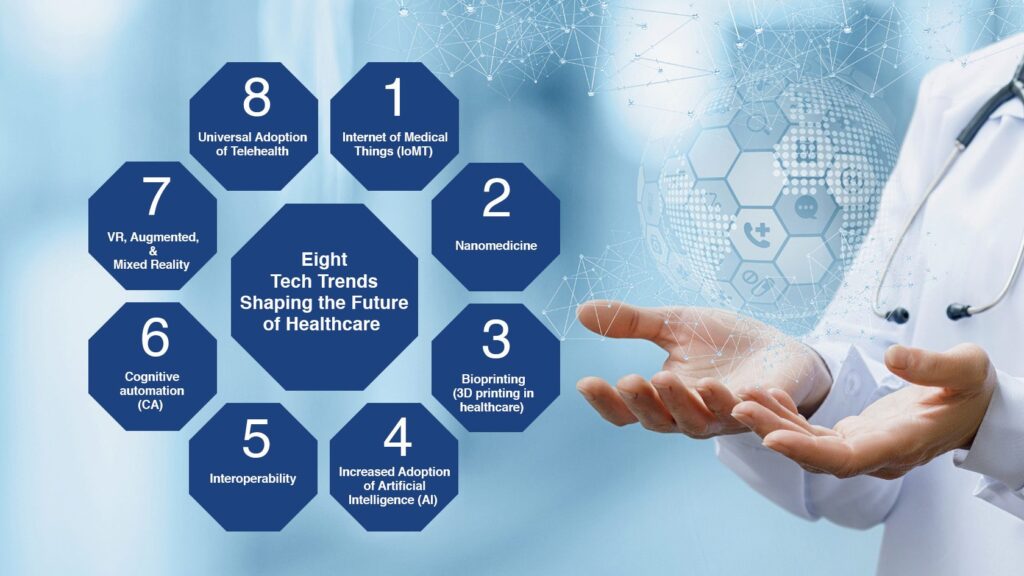
Learn how tech trends like IoMT, Nanomedicine, Bioprinting, AI, Interoperability, Cognitive automation, Telehealth, VR, & AR are shaping the future of healthcare
How next-generation applications unlock business value

Introduction Numerous businesses have already begun the journey to digitalization. This transition is necessary for survival and success in the new digital and intelligent world. According to a McKinsey report , “Seventy percent of executives say that over the next three years, they expect digital trends and initiatives to create greater top-line revenues for their businesses, as well as increased profitability.” Most native apps have been doomed to failure from the moment they were released. Many apps started to deteriorate the moment they were released, whether as a result of shifting screen resolutions, underlying platform modifications, or just out-of-date, hard-coded content. Simply sustaining apps requires expensive and resource-intensive code maintenance, hardware infrastructure, highly skilled developers for each platform, and regular app store updates, among other things. Worse, many applications developed for a particular platform (such as Android or iOS) are incompatible with other platforms, resulting in confusing customer experiences. Developing apps, the old-fashioned way, from scratch, is no longer feasible. New features and capabilities are expected by businesses nearly immediately. Therefore, if you want to create the next great businsess app, reduced time to market and exceptional agility are necessities. Businesses in the modern day need apps that can scale to meet the needs of their customers (or employees), adapt to new requirements as they arise, and work across numerous platforms without requiring regular maintenance from IT professionals. Pam Moore, Founder Marketing Nutz, share a quote from John Chambers, Exec Chairman Cisco Systems, “At least 40% of all businesses will die in the next 10 years. If they don’t figure out how to change their entire company to accommodate new technologies.” “At least 40% of all businesses will die in the next 10 years… If they don’t figure out how to change their entire company to accommodate new technologies.” — John Chambers, Exec Chairman Cisco Systems #digitaltransformation #leadership — Pam Moore (@PamMktgNut) March 17, 2021 Fortunately, a new paradigm is developing to address these problems. A new approach where cutting-edge apps are developed utilizing a new methodology – Next Gen Application Development & Maintenance (ADM). This blog offers an overview of how the new next-generation applications development is unlocking business value. But before that, let’s look at what next-generation applications are. What are next-generation applications? Legacy applications are expensive, proprietary, and time-consuming to deploy. They operate on expensive infrastructure, employ archaic licensing models, and are challenging to deploy. Legacy apps are typically monolithic, making it difficult for them to scale in accordance with growing demand. Because of this, they can only expand in one direction, which is vertically, by using the same few massive servers with additional hardware resources. Just using cloud infrastructure to host legacy apps is not enough to meet the demands of new customers. Conversely, next-generation apps are future-ready, loosely coupled, and scale independently, i.e., offer horizontal scalability. Next-generation apps are developed utilizing serverless operating models, modular architecture, agile development processes, and DevOps approaches. They’re a step up over their predecessors because of their increased flexibility, scalability, portability, and resilience. They shorten the time it takes to bring new products to market and cut down on overall costs for businesses. Next-generation application development and maintenance (ADM) is a notion that aims to extend the life of apps—possibly indefinitely—by connecting the processes of developing and managing them with broader business goals. Next-generation apps are designed to accommodate millions of users and numerous deployment models (such as local servers and the cloud). The next-generation application development approach automates a significant portion of the operational overhead involved with traditional application development. As a result, teams can concentrate on business logic and create higher-quality solutions. Key characteristics of next-generation applications To enhance healthcare cybersecurity resilience and minimize cyber risks, medical professionals must be trained to be better prepared for all the healthcare cybersecurity risks they will likely encounter. However, medical professionals are usually undertrained, and it’s can be pretty challenging to educate and inform the medical staff about cyber threats as they have competing priorities in varied roles and time limitations. Healthcare staff must be familiarized with basic online protection, best practices and training to identify common Cybersecurity and medical device risks as medical devices usually collect, store, and transmit protected healthcare information over the network, posing a security risk to patient information. To empower medical staff, it would be beneficial to provide a simple user interface and a secure network that is quick and easy to access. Furthermore, solutions like SSO and MFA continue to gain popularity as they use a one-time code – adding additional security layers without requiring the user to know anything more than their own login credentials. Medical devices are an easy entry point for hackers Flexible No firm is immune to change, so businesses must anticipate industry needs and trends and adapt to client demands. From healthcare and automotive to retail, all industries need to continuously enhance products, shorten release cycles, and deliver regular upgrades. Thus, a healthcare provider that wants to introduce a new client engagement feature to its mobile app, an automaker that promises a new car every week, or a retailer competing with Amazon all require nibble and responsive applications to change quickly at scale. Responsive architecture Next-generation applications must be designed in such a way that they can adapt to new conditions and new requirements, all while remaining in sync with the needs of the business. This implies that they should be designed and controlled using a discrete and dynamic architecture. Eric Johnson, Principal developer advocate, AWS, at AWS re:Invent 2022 talks about Building next-gen applications with event-driven architectures. Insight-driven At times, it is necessary for staff to have access to confidential patient data, both locally & remotely, and on multiple devices. Due to the urgency of the medical industry, staff members must be able to share information immediately – there’s no time to pause and consider the security implications of the devices they’re using. The primary concern here is that the devices used to share information are not always secure. If
Top 10 must use product led growth tools in 2023

Product-led growth is a hot trend in the world of software-as-a-service but implementing it successfully requires the right tools. Discover the top 10 must-use tools for 2023
Healthcare transformation with next-gen clinical BI

Healthcare transformation is improving patient lives and safety with the use of analysis of data captured in the healthcare setting to make informed decision
Why product led growth is an go-to-market strategy for startups
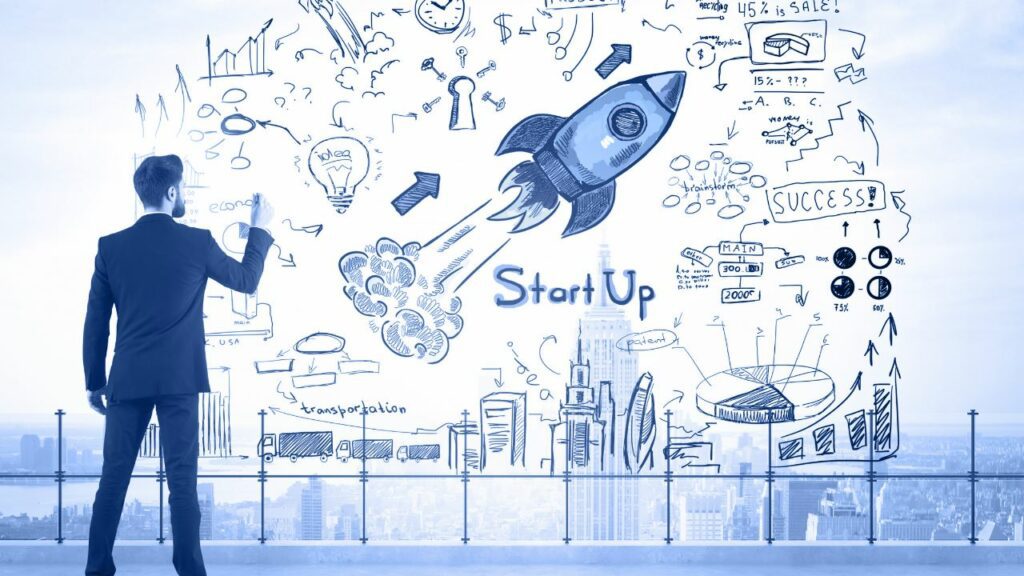
Learn how product led growth can transform your SaaS startup. Learn how customer-centric approaches can improve user engagement and onboarding.
Digital Revolution Contributing to A Rise in Cybersecurity Threats

The digital revolution has led to significant rise in Cybersecurity Threats globally and has created both enormous opportunities and great challenges in the cyberspace
Why healthcare is the biggest target for cyberattacks
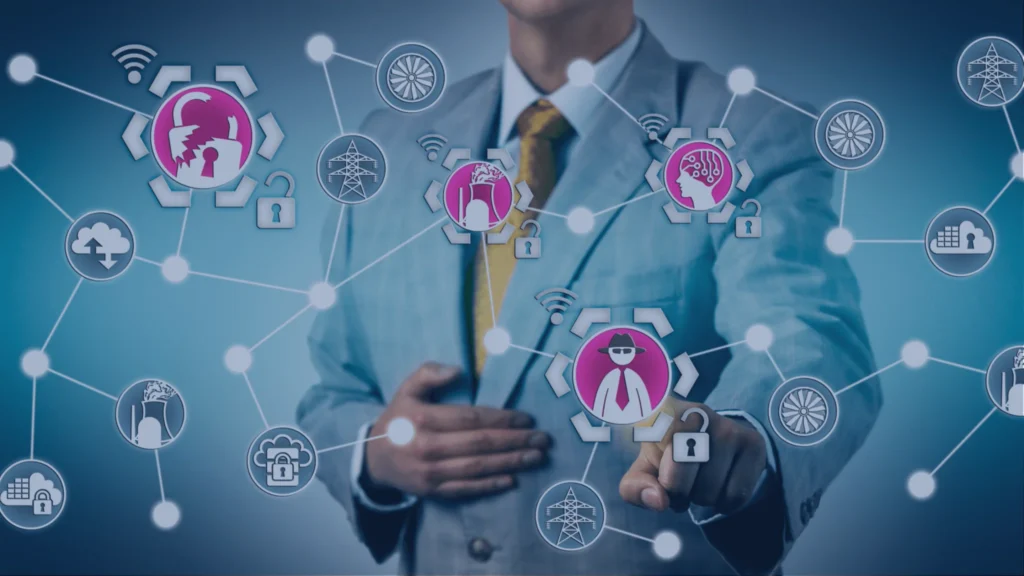
Healthcare organizations are easy target of cyberattacks because patient data is valuable, old technology, staffs lack knowledge, remote access, Medical devices are easy target
Future of a Digitized Healthcare
Digital healthcare trends hint to a future where focus on prevention & wellbeing, Consumer engagement & empowerment, Predictive Analytics, Interoperability are prominent
5 Reasons Augmented BI Is What Organizations Need Now

Augmented BI analytics uses AI & ML to gives business users intuitive, intelligent tools to prepare, analyze and visualize data helping businesses make data-driven decisions
Top 25 Digital Transformation Influencers You Need to Follow

Here are the top 25 top digital transformation influencers that you should follow to make sure that the next big digital transformation trends